Abuse is a complex and multifaceted experience, particularly when it occurs within a relationship that continues through shared parenthood. When children are involved, separation does not mean complete disconnection, and this reality can create profound emotional conflicts. On one hand, there is deep pain and anger surrounding the harm that was done—both to oneself and to one’s children. The lasting impact of that harm can be seen in how quickly children are forced to mature, and in the fear that limits their ability to express themselves openly and authentically. For survivors of abuse, silence often becomes a learned coping mechanism, and witnessing children adopt similar patterns can be especially painful.
At the same time, there can exist a conflicting sense of gratitude for the children that emerged from the relationship. Holding both pain and appreciation simultaneously reflects the emotional complexity many survivors experience. Without that relationship, the children who exist today would not be who they are, and acknowledging this does not minimize the harm that occurred, but rather recognizes the layered nature of lived experience.
From a psychological perspective, children learn both adaptive and maladaptive behaviors through their parents. My children demonstrate compassion, intelligence, and a strong desire to grow beyond the limitations they have witnessed. They enjoy academics, sports, social connections, and new experiences, and they possess an admirable curiosity about the world. They reflect a blend of both parents in their physical features and cognitive traits, including quick thinking, problem-solving skills, and creativity. At the same time, they continue to develop emotional regulation skills, an area in which growth is ongoing for all of us. Learning to express emotions effectively—rather than suppressing or avoiding them—has been a significant area of progress for our family and remains an important part of healing.
I have long recognized that my children’s strengths are not solely shaped by me, but also by their father. Acknowledging this does not negate the harm of the past; rather, it affirms the complexity of identity development and attachment in children.
My own upbringing provides an important contrast. Although my childhood included moments of chaos, it was grounded in a family system where adults supported one another and prioritized the well-being of their children. My parents and step-parent functioned as a cohesive team, modeling cooperation and mutual respect. As an adult, I recognize the long-term value of that stability and the protective role it played in our emotional development.
I also recognize that my experience differs significantly from that model. A traditional co-parenting relationship with my ex-husband has proven unworkable due to ongoing conflict. Instead, I have adopted a parallel parenting approach, a strategy often recommended in high-conflict situations. Parallel parenting allows each parent to maintain separate households with minimal direct interaction, reducing emotional strain and exposure to conflict for the children. While not without its challenges, this approach has provided space for emotional boundaries and individual healing.
Establishing firm boundaries has allowed me to find a sense of peace. I am intentional about shielding my children from adult conflict and refrain from sharing my private reflections or negative interactions with their father. This choice is rooted in a desire to allow them the freedom to form their own relationship with him. Although my children are aware of the past due to their own lived experiences, their love for their father remains, and that attachment is respected.
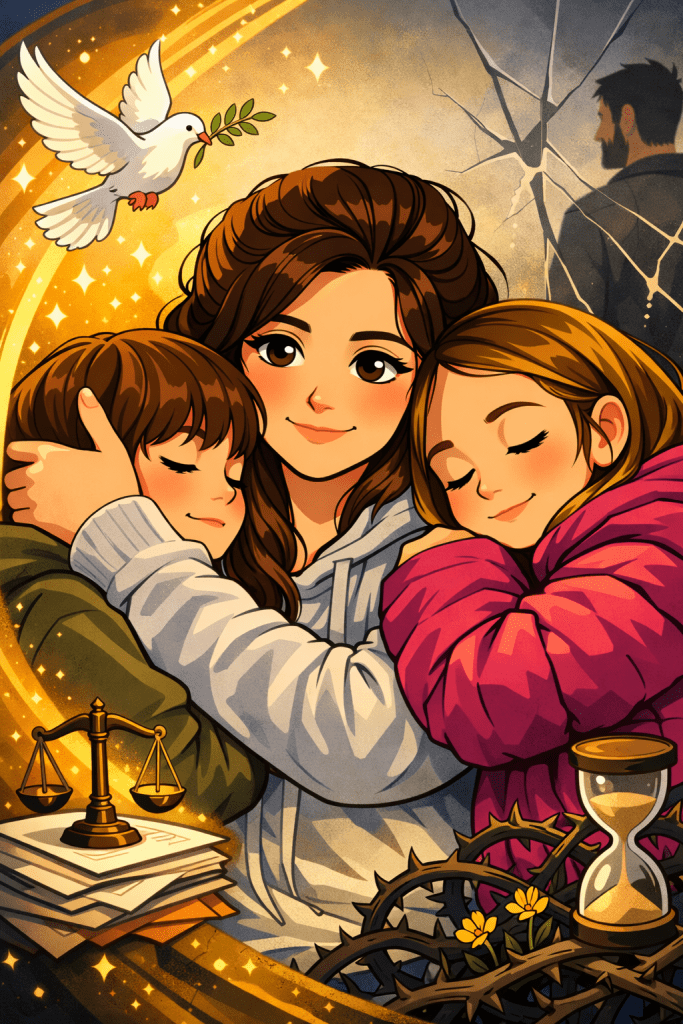
As a parent, I am both protective and reflective. I have chosen to practice forgiveness—not as an act of minimizing harm or denying the past, but as a way to support my own emotional well-being and that of my children. Forgiveness, in this context, is not reconciliation or silence. It exists alongside accountability and truth. Healing requires the ability to acknowledge and speak about past experiences, and refusing to be silenced is an essential part of reclaiming autonomy and fostering long-term psychological health.
Madeline McDonald – I Forgive You (Official Video)


Leave a comment